
Sovereign Gold Bonds (SGB) in India 2026: 2.5% Interest, 12.5% Tax, Maturity, Exit — Still Worth It?
By author: Prathamesh C.
Financial Analyst | Published: September 30, 2026 | Read time: 18 minutes
Disclaimer: This article is for educational purposes only and should not be construed as formal financial, tax or legal advice. Tax rules and RBI schedules can change, so verify current provisions and consult a qualified professional before acting.
Key Takeaways
- Interest: SGBs pay a fixed 2.50% a year on the issue price, credited twice a year and fully taxable at your slab rate.
- Tax: From April 1, 2026, tax-free maturity applies only to original subscribers who hold all 8 years. Other exits face 12.5% LTCG or slab-rate tax.
- Availability: No fresh tranche has opened since February 2024, so new buyers can only purchase on the BSE or NSE, without the maturity exemption.
Since April 1, 2026, only original subscribers who hold a Sovereign Gold Bond for the full 8 years keep a 0% capital gains outcome. Every other exit is taxable: 12.5% long-term capital gains tax (LTCG) without indexation after 12 months, or slab-rate tax on shorter holdings, plus 4% cess.
Fresh issuance has also stopped. The last tranche, FY 2023–24 Series IV, opened in February 2024, and the government has announced no issuance calendar for FY 2024–25, FY 2025–26 or FY 2026–27.
Coverage below spans the 2.50% coupon, the 8-year maturity payout, early exit options, the Budget 2026 tax change, ITR reporting and a comparison with fixed deposits, physical gold and Gold ETFs. Figures come from research compiled from RBI material and published tax explainers, listed under Sources.
Related Read: Which Banks Offer the Highest FD Rates in India? (Top Rate: 8.60% — September 2026 Update)
What Are Sovereign Gold Bonds and What Are Their Key Terms in 2026?
Sovereign Gold Bonds (SGBs) are government securities denominated in grams of gold and issued by the Reserve Bank of India (RBI) on behalf of the Government of India. Investors earn a fixed 2.50% annual coupon plus a redemption value linked to the gold price.
Launched in November 2015, the scheme aimed to convert household demand for physical bullion into paper-based savings. The goal was to ease the Current Account Deficit (CAD) driven by gold imports.
Table 1: Sovereign Gold Bond key terms in India (2026). Coupon, tenure, pricing, exit and issuance status for existing SGB holders.
| Parameter | Detail |
|---|---|
| Issuer | RBI, on behalf of the Government of India |
| Denomination | Grams of gold |
| Coupon | 2.50% p.a., fixed on the initial nominal price, paid semi-annually |
| Tenure | 8 years mandatory; no extension or rollover |
| Purity benchmark | 999 purity (24-karat gold), IBJA rates |
| Maturity value | Simple average of IBJA 999 closing prices over the last 3 working days before redemption |
| Settlement | Cash to the linked bank account; no physical delivery |
| Early exit | BSE/NSE resale at any time; RBI premature redemption from year 5 on coupon dates |
| Latest tranche | FY 2023–24 Series IV (February 2024) |
| Credit risk | Sovereign guarantee |
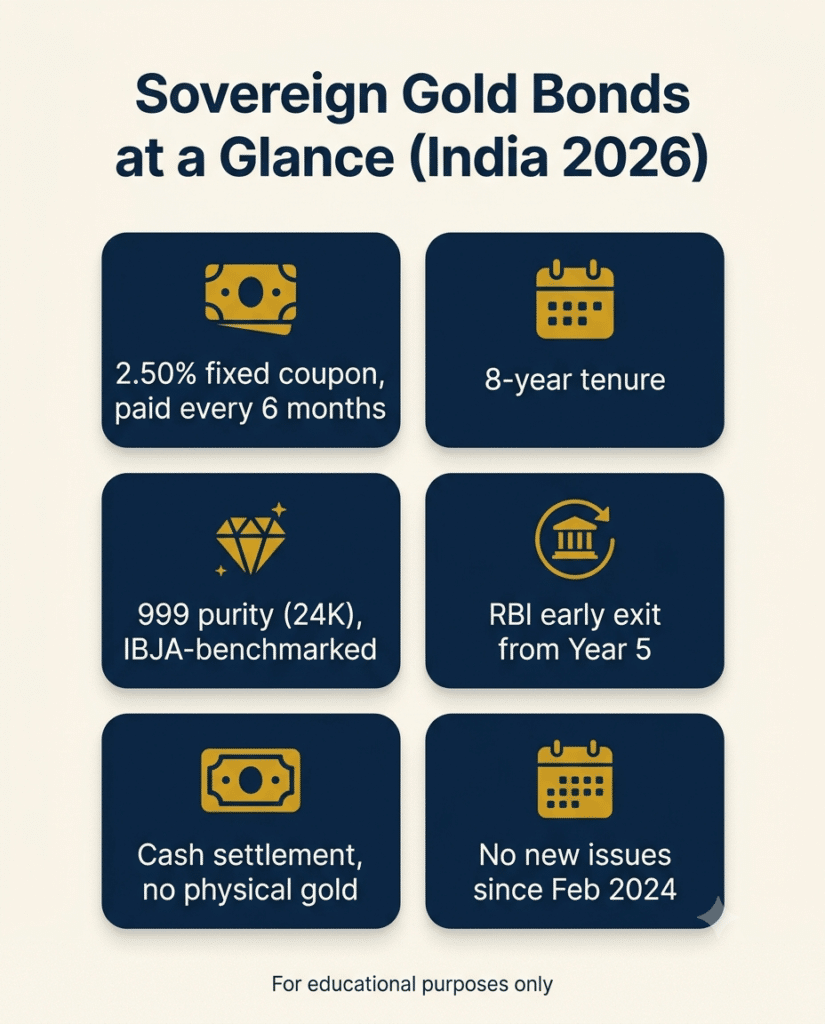
Figure 1: Sovereign Gold Bond key terms at a glance.
Related Read: Is There a 0% Interest Home Loan in India? What’s Actually Available (Up to ₹1.80 Lakh in Real Subsidy)
Are Sovereign Gold Bonds Still Available to Buy in 2026?
No. Fresh SGB issuance has been discontinued, and the final primary tranche, FY 2023–24 Series IV, was released in February 2024.
The government announced no issuance calendar for FY 2024–25, FY 2025–26 or FY 2026–27. Ministry of Finance communications cited in the source material confirm no plans to reopen subscription windows.
Primary buying from the RBI has therefore ended. New buyers can only purchase existing units on the BSE and NSE, while every previously issued tranche remains a valid sovereign obligation that the RBI will honour through coupons, premature redemption windows and 8-year maturity.
Why Did the Government Stop Issuing SGBs?
From the government’s balance sheet, SGB capital is an unhedged liability tied to international gold prices. Conventional Government Securities (G-Secs), by contrast, fund revenue-generating infrastructure.
Gold prices rose over 65% across recent market cycles, according to analysis from Monetary Metals. That rise enlarged the principal owed on maturing tranches, while a fixed 2.50% coupon on the initial subscription value kept cash outflows running.
Rising bullion prices plus annual payouts made SGBs an expensive form of sovereign borrowing. Under its fiscal-deficit and debt-reduction agenda, the government halted new tranches to limit future unhedged liabilities.
For the RBI and depositories, the practical result is a closed book: only existing bonds remain to administer. For investors, exchange trading is the sole entry route.
How Much Interest Do SGBs Pay in 2026 and How Is It Taxed?
SGBs pay a fixed 2.50% per year on the initial nominal subscription price, credited semi-annually to the linked bank account. The rate does not change when the gold price moves.
On a ₹1,00,000 initial investment, the coupon is ₹2,500 a year, or ₹1,250 every six months.
Coupon income is fully taxable as “Income from Other Sources” at the investor’s slab rate. No TDS is deducted, so investors must self-report and pay through quarterly advance tax.
For a salaried investor at a 30% slab, tax on ₹2,500 is ₹780 (₹750 plus ₹30 cess). That leaves ₹1,720, an effective post-tax coupon of about 1.72%.
Figures above are illustrative and exclude surcharge.
Why Is My SGB Interest Delayed?
Delayed or failed coupon credits usually trace back to administrative mismatches, not the scheme itself. Common causes include outdated bank details in the RBI e-Kuber system, demat depository mismatches and closed bank accounts.
Bondholders facing a delay should confirm that the linked bank account is active and matches the depository record. Updates go through the depository participant or bank.
When Do SGBs Mature and How Is the Maturity Value Calculated?
SGBs have a mandatory 8-year tenure. At maturity, the RBI redeems the units automatically, pays the proceeds into the linked bank account and extinguishes the bond certificate.
Maturity value per unit equals the simple average of IBJA closing prices for 999 purity gold over the three working days before the redemption date. Payment is in cash at prevailing 24-karat rates, and physical gold is never delivered.
Investors cannot extend, roll over or hold an SGB beyond the 8-year term. Because the payout tracks the gold price, proceeds can fall below the purchase cost if gold declines.
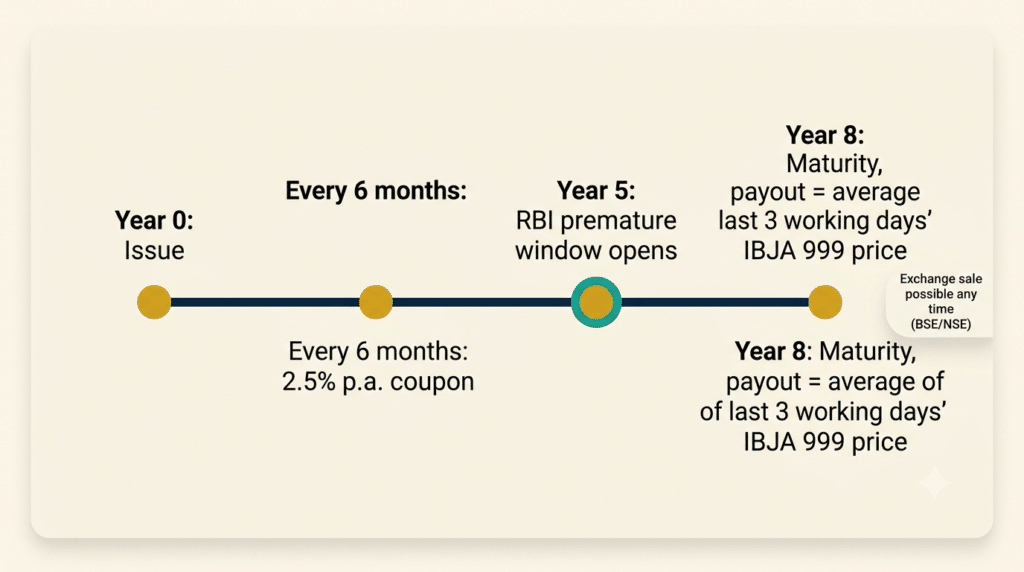
Figure 2: Sovereign Gold Bond life cycle from issue to 8-year maturity.
How Can You Exit an SGB Before Maturity?
Two exit routes exist before the 8-year mark: selling on the BSE or NSE at any time, or using the RBI premature redemption window from the fifth year.
Selling SGB Units on the Stock Exchange
SGB units trade on the BSE and NSE through a demat account, but liquidity varies by series. Sellers often accept prices below the intrinsic gold value.
Using the RBI Premature Redemption Window
From the fifth year after issuance, the RBI opens early redemption on semi-annual coupon dates. Investors submit a request through their depository participant, bank or post office within the prescribed window.
The RBI publishes an annual premature redemption schedule listing eligibility windows and submission deadlines. Livemint reported that the 2026–27 calendar covers 32 eligible tranches.
Upstox has flagged four exit dates in October 2026. Holders should confirm their tranche’s dates and request deadlines on the official RBI schedule.
Table 2: SGB exit routes compared. Availability, process and main trade-off for exchange sale, RBI premature redemption and maturity.
| Exit route | When available | How to exercise | Key trade-off |
|---|---|---|---|
| Exchange sale | Any time after listing | Sell through a demat/trading account on BSE or NSE | Liquidity varies by series; discounts to intrinsic gold value are common |
| RBI premature redemption | From year 5, on semi-annual coupon dates | Request via depository participant, bank or post office within the window | Limited to scheduled windows; taxable from April 1, 2026 |
| Maturity redemption | End of year 8 | Automatic RBI redemption to the linked bank account | Locks capital for 8 years; payout tracks the gold price |
How Are SGBs Taxed After Budget 2026?
From April 1, 2026, capital gains exemption on SGB redemption requires two conditions: original subscription and continuous holding for the full 8 years. The rule comes from Union Budget 2026 and the Finance Act 2026, and sits in Section 70(1)(x) of the Income Tax Act 2025, which replaces Section 47(viic).
What Changed From April 1, 2026?
Before April 1, 2026, every redemption made directly with the RBI, including 5-year premature exits, was exempt from capital gains tax for original individual subscribers.
Now the exemption needs both original subscription (primary issue or legal inheritance) and continuous holding to scheduled maturity. Failing either condition makes the gains taxable.
Explainers on the change have been published by NISM and Value Research, the latter focused on why exchange buyers now pay more tax.
What Does the Tax Change Mean in Rupees?
Take a hypothetical bond bought at ₹10,000 per gram and redeemed at ₹14,000 per gram at maturity, a gain of ₹4,000 per gram.
An original subscriber holding all 8 years pays ₹0. A secondary-market buyer pays 12.5% LTCG of ₹500 plus 4% cess of ₹20, a total of ₹520 per gram before surcharge.
On 10 grams, the tax is ₹5,200, about 3.7% of the ₹14,000 redemption value per gram. Rates follow the figures cited above; actual liability depends on surcharge and individual circumstances.
How Is Each SGB Exit Scenario Taxed?
Table 3: SGB capital gains tax by investor type and exit route (transactions on or after April 1, 2026). Tax rate and statutory authority for original subscribers and secondary-market buyers.
| Investor | Exit route and holding period | Tax treatment | Authority |
|---|---|---|---|
| Original subscriber | 8-year maturity via RBI redemption | 0% capital gains tax (fully exempt) | Section 70(1)(x), Income Tax Act 2025 |
| Original subscriber | RBI premature window (years 5–7) | 12.5% LTCG, no indexation, plus cess and any surcharge | Finance Act 2026 provisions |
| Original subscriber | Exchange sale after more than 12 months | 12.5% LTCG, no indexation, plus cess and any surcharge | Listed capital asset provisions |
| Original subscriber | Exchange sale within 12 months | Short-term gain taxed at slab rate | Short-term capital asset rules |
| Secondary-market buyer | 8-year maturity or RBI early exit | 12.5% LTCG, no indexation, plus cess and any surcharge | Section 70 exemption restriction |
| Secondary-market buyer | Exchange sale after more than 12 months | 12.5% LTCG, no indexation, plus cess and any surcharge | Listed capital asset provisions |
| Secondary-market buyer | Exchange sale within 12 months | Short-term gain taxed at slab rate | Short-term capital asset rules |
| All investors | Semi-annual 2.50% coupon | Taxed at slab rate | Income from Other Sources (Schedule OS) |
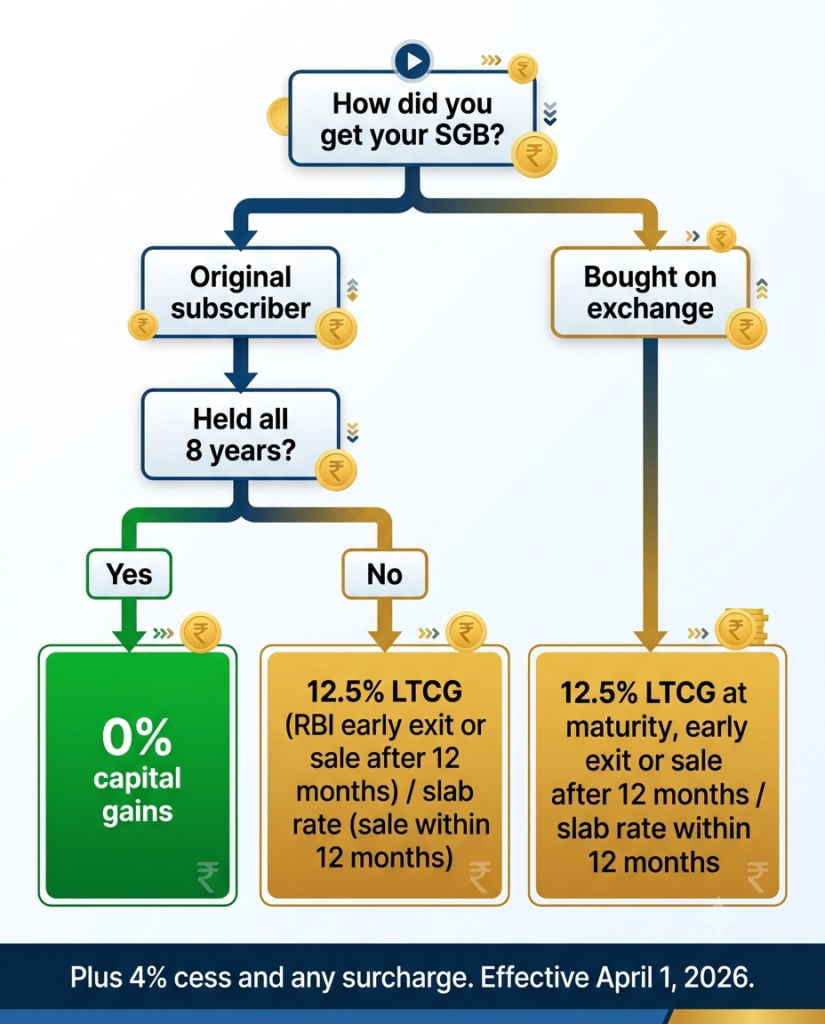
Figure 3: Who pays what on SGB capital gains after April 1, 2026.
For a small investor who bought on the exchange, the takeaway is direct: holding to maturity no longer removes the tax. Secondary-market pricing now has to account for a 12.5% LTCG bill at exit.
How Do You Report SGB Income in Your ITR?
Taxpayers holding, trading or redeeming SGBs report transactions in ITR-2, ITR-3 or ITR-4, using different schedules for interest, exempt maturity proceeds and taxable gains.
Table 4: Where to report SGB income in your ITR (AY 2026-27 guidance). ITR schedule and line-item entry for coupon interest, exempt maturity proceeds, taxable gains and physical gold sales.
| Income type | ITR schedule | How to enter it |
|---|---|---|
| Annual coupon interest | Schedule OS (Income from Other Sources) | Select “Interest Income”; description “Interest on Sovereign Gold Bonds”; reconcile with Form 26AS and AIS |
| Tax-exempt maturity proceeds (original subscriber, full 8 years) | Schedule EI (Exempt Income) | Category “Other”, sub-category “Receipts not in the nature of income” or “Other Exempt Income”; narrative citing Section 70(1)(x) / Section 47(viic); enter total payout |
| Taxable SGB gains (exchange sale, secondary-buyer redemption, premature RBI exit) | Schedule CG (Capital Gains) | Enter gross sale/redemption value and acquisition cost under listed securities; holdings above 12 months are long-term at 12.5% |
| Physical gold, jewellery or digital gold sales | Schedule CG (Capital Gains) | Long-term after 24 months at 12.5% without indexation; shorter holdings taxed at slab rates |
Because no TDS is withheld, taxpayers must declare the full annual coupon manually and reconcile it with Form 26AS and the Annual Information Statement (AIS).
Omitting SGB interest can attract under-reporting or mis-reporting penalties of 50% to 200% of the tax payable.
Original subscribers who complete 8 years report proceeds under Schedule EI, not Schedule CG. Statutory redemption is not treated as a taxable transfer.
Recent walkthroughs from NDTV Profit and Livemint cover the same schedule mapping for AY 2026-27.
Show Image
Figure 4: Which ITR schedule to use for each type of SGB income.
SGB vs PSU Tax-Free Bonds: Which Tax Exemption Fits Better?
Section 10(15)(iv)(h) PSU tax-free bonds, issued by entities such as NHAI, PFC, REC and IRFC, exempt 100% of coupon interest regardless of the investor’s tax bracket. Primary issuances have ended, but the bonds trade on the secondary market.
The exemption covers coupons only. Selling a tax-free bond after 12 months at a gain still attracts 12.5% LTCG without indexation.
SGBs invert that logic: the coupon is taxable, while maturity gains are exempt only for original subscribers.
Table 5: Sovereign Gold Bonds vs Section 10(15)(iv)(h) PSU tax-free bonds (India, 2026). Underlying asset, coupon, tax treatment and credit profile side by side.
| Parameter | Sovereign Gold Bonds (SGB) | PSU Tax-Free Bonds |
|---|---|---|
| Underlying asset | Spot price of 999 purity gold | Fixed-principal sovereign-backed debt |
| Annual coupon | 2.50% p.a. on nominal issue price | About 5.50%–8.50% p.a. fixed on face value |
| Coupon taxability | Fully taxable at slab rate | 100% tax-exempt under Section 10(15)(iv)(h) |
| Maturity capital gains tax | Exempt (original subscriber, 8-year hold only) | Taxable on secondary-market price spreads |
| Resale capital gains tax | 12.5% LTCG (above 12 months) / slab-rate STCG (12 months or less) | 12.5% LTCG (above 12 months) / slab-rate STCG (12 months or less) |
| Credit profile | Sovereign guarantee (Government of India) | AAA-rated government undertakings (NHAI, REC) |
| Inflation link | High (tracks gold price appreciation) | Low (fixed nominal cash flows face inflation drag) |
Related Read: <a href=”/tax-free-bonds-india-2026/”>Tax-Free Bonds in India 2026</a> — issuers, yields and secondary-market buying.
SGB vs Fixed Deposits, Physical Gold and Gold ETFs: How Do They Compare?
SGBs pair a 2.50% coupon with gold-linked appreciation, while bank fixed deposits (FDs) pay 6.50% to 7.50% with no price upside. Physical gold and Gold ETFs pay no cash yield at all.
Table 6: SGB vs bank FD vs physical gold vs Gold ETF (India, 2026). Yield, tax, holding period, costs, liquidity and risk across four popular ways to hold gold or fixed income.
| Feature | Sovereign Gold Bonds (SGB) | Bank Fixed Deposits (FD) | Physical Gold (bullion/jewellery) | Gold ETFs |
|---|---|---|---|---|
| Annual cash yield | 2.50% p.a. on nominal issue price | 6.50%–7.50% p.a. fixed interest | Zero | Zero |
| Principal appreciation | Linked to spot 24K gold rates | None (nominal value fixed) | Linked to spot gold rates | Linked to spot gold rates |
| Annual interest taxation | Slab rate | Slab rate | Not applicable | Not applicable |
| LTCG holding period | 12 months (exchange resale) | Not applicable (taxed as interest) | 24 months | 12 months |
| LTCG tax rate | 0% (original subscriber, 8-year hold) / 12.5% otherwise | Slab rate | 12.5%, no indexation | 12.5%, no indexation |
| Friction / holding cost | No transaction or storage fees | No creation fees | 3% GST plus making charges | Brokerage plus about 0.2%–0.8% expense ratio |
| Liquidity and exit | Low on exchange; RBI window from year 5 | High (premature exit penalty applies) | High (immediate sale to jewellers) | High (intraday exchange trading) |
| Default / credit risk | Nil (sovereign guarantee) | Insured up to ₹5 lakh (DICGC) | Counterparty and theft risk | Low (backed by physical bullion vaults) |
Show Image
Figure 5: Four-way comparison of SGBs, FDs, physical gold and Gold ETFs.
Related Read: <a href=”/sgb-vs-fixed-deposit/”>SGB vs Fixed Deposit: Which Gives Better Post-Tax Returns?</a> — side-by-side maths by tax slab.
SGB vs Bank Fixed Deposits
FD interest is fully taxable at slab rates, and the principal carries no inflation protection. SGBs offer a lower fixed coupon combined with gold-linked capital appreciation, functioning as a real-asset inflation hedge.
At a 30% slab plus 4% cess, a 7% FD yields about 4.82% after tax. Against the SGB’s 1.72% post-tax coupon, the FD’s income advantage is roughly 3.1 percentage points before any gold price gain (illustrative, excluding surcharge).
SGB vs Physical Gold
Buying physical gold involves 3% GST, making charges of 5% to 20%, storage costs and security risks. Sales are taxed at 12.5% after 24 months, with zero annual income.
SGBs remove storage and making charges, add a 2.50% coupon and offer tax-free maturity for original holders.
SGB vs Gold ETFs
Gold ETFs trade with high liquidity and tight bid-ask spreads. Expense ratios run 0.20% to 0.80% a year, no coupon is paid, and gains are taxed at 12.5% after 12 months with no exempt-maturity option.
What Are the Main Risks and Disadvantages of SGBs?
Tax advantages for long-term original holders come with structural trade-offs:
- Maturity lock-in and illiquidity: The 8-year tenure ties up capital, and thin exchange trading often forces sellers to accept discounts to spot gold rates.
- Downside price volatility: Redemption value moves with spot gold. If global prices fall, maturity proceeds fall proportionally, and capital losses are possible.
- Taxable coupon income: The 2.50% payout is fully taxable at slab rates, which trims net yield for high-income investors.
- No primary subscription: With RBI issuance closed, new investors can only buy on the exchange and forfeit the 8-year maturity tax exemption.
- Credit risk is nil: The sovereign guarantee removes default risk, so the real risks are price, liquidity and tax.
Are Sovereign Gold Bonds Still Worth It in 2026?
The answer depends on how the bond was acquired. Budget 2026 divides SGB holders into groups with different tax outcomes.
Original Subscribers Holding Pre-2024 Tranches
For original subscribers, holding to full 8-year maturity remains the only route to 100% tax-free capital gains. Exiting through the RBI premature window after April 1, 2026 triggers 12.5% LTCG and forfeits the exemption.
The source analysis concludes that these holders maximise post-tax returns by retaining bonds to maturity. In the earlier hypothetical, the exemption is worth ₹520 per gram.
Secondary-Market Buyers
Buyers on the BSE or NSE lose the maturity exemption and owe 12.5% LTCG on redemption gains. Source analysis suggests secondary SGBs make sense only when they trade at a discount to the gold spot rate large enough to cover future tax and offset thin liquidity.
New Money Looking for Paper Gold
For fresh allocations, Gold ETFs offer intraday liquidity, tight tracking and 0.20% to 0.80% expense ratios. Tax treatment matches SGB exchange sales at 12.5% LTCG, without a lock-in.
Investors who want tax-exempt income rather than gold exposure may also weigh Section 10(15)(iv)(h) PSU tax-free bonds, whose coupons are 100% exempt.
Show Image
Figure 6: SGB outlook by investor profile after Budget 2026.
Table 7: SGB decision guide by investor profile (educational summary, not advice). Key tax outcome and the source analysis’s pointer for each type of investor.
| Investor profile | Key tax outcome | What the analysis points to |
|---|---|---|
| Original subscriber, pre-2024 tranche | 0% on 8-year maturity; 12.5% LTCG on premature exit | Retain to maturity to keep the exemption |
| Secondary-market holder or buyer | 12.5% LTCG on maturity or early redemption | Buy only at a discount that covers tax and low liquidity |
| New investor seeking paper gold | No primary window; Gold ETF gains taxed at 12.5% after 12 months | Gold ETFs are an efficient alternative |
| Investor seeking tax-free income | 100% exempt coupons on PSU tax-free bonds; gains taxable | Weigh PSU tax-free bonds |
SGBs remain valuable for those who already hold original tranches and can wait for maturity. For everyone else, the 2026 rules narrow the case for buying on the exchange and shift attention to liquidity, cost and tax efficiency.
Frequently Asked Questions About Sovereign Gold Bonds in India
Are Sovereign Gold Bonds still available in 2026?
What is the interest rate on Sovereign Gold Bonds?
Is SGB interest taxable?
Is SGB maturity still tax-free after Budget 2026?
Can I redeem an SGB before 8 years?
How is the SGB maturity value calculated?
Do I get physical gold when an SGB matures?
How do I report SGB income in my ITR?
Is it worth buying SGBs on the secondary market?
Why did the government stop issuing SGBs?
Sources and References
Regulatory and official
- Reserve Bank of India — Swarna Bharat (SGB scheme page)
- Reserve Bank of India — SGB press release
- Reserve Bank of India — Sovereign Gold Bond FAQs
- Income Tax Department — ITR-2 User Manual
Budget 2026 tax change and ITR reporting
- NISM — How Budget 2026 changes SGB taxation
- Value Research — SGB tax change 2026: why exchange buyers pay more tax
- CAalley — Budget 2026 changes SGB tax rules
- Arihant Capital — SGB tax rule changes in Budget 2026
- Toolisky — SGB premature redemption tax exemption
- TaxGarden — SGB taxation AY 2026-27
- TaxClue — Sovereign Gold Bond tax 2025-26
- NDTV Profit — ITR filing 2026: reporting Sovereign Gold Bonds
- Livemint — ITR filing AY 2026-27: reporting SGB income
- Upstox — Reporting SGB interest and capital gains in ITR
- HDFC Bank — Tax benefits on Sovereign Gold Bonds
Issuance status, maturity and exit windows
- GoldenPi — SGB scheme discontinued for new issues
- Monetary Metals — Why India stopped its SGB scheme
- Impri India — Why India discontinued the Sovereign Gold Bond
- Stable Money — SGB next issue date
- Livemint — RBI SGB premature redemption calendar 2026-27
- Upstox — SGB premature redemption October 2026
Tax-free bonds