


Why Is HDFC ERGO Insurance So Expensive? The 84–89% Claim Ratio Behind the Price (2026)

By Prathamesh C., Financial Analyst · 9 min read · September 26, 2026
Disclaimer: This article is for educational purposes only and should not be construed as formal financial or insurance advice. Please review policy wordings and consult a licensed advisor before purchasing any insurance product.
“
Key takeaways
- HDFC ERGO’s health segment Incurred Claim Ratio runs 84.85%–89.47%, well above the 60–80% range insurers treat as sustainable — it simply pays out more per rupee collected.
- An in-house claims team (no third-party administrators) and a 13,000–16,000 hospital network add cost that competitors outsourcing claims don’t carry.
- Flagship plans like Optima Secure skip common cost-cutting features — room-rent limits, co-pay, capped restoration — which pushes the base premium up.
HDFC ERGO closed FY 2025–26 with ₹813 crore in net profit, up 62.6% year-on-year, even as its reported premium book shrank on paper. That gap between rising profit and falling headline premium is the starting point for understanding why its policies cost more than many rivals.
Who Owns HDFC ERGO, and How Is It Actually Performing?
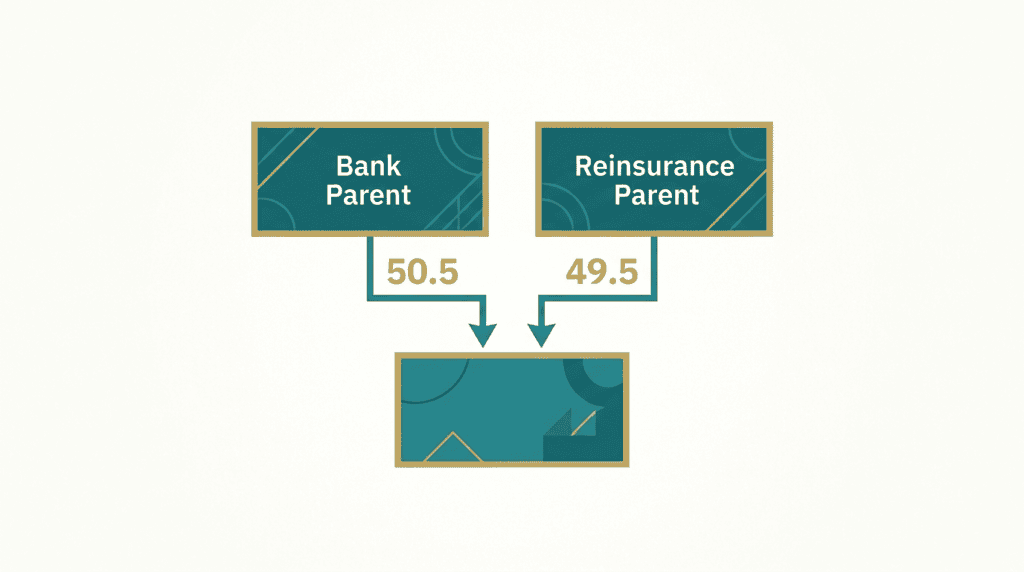
HDFC ERGO General Insurance is a joint venture between HDFC Bank Limited and ERGO International AG, the insurance arm of Germany’s Munich Re Group. Following HDFC Bank’s 2023 reverse merger with HDFC Ltd, the bank became the direct majority parent.
| Metric | FY 2023-24 | FY 2024-25 | FY 2025-26 |
|---|---|---|---|
| Gross Written Premium | ₹18,802 cr | ₹16,229 cr | ₹15,025–15,661 cr |
| Market share (GDPI) | ~6.00% | 5.14% | 4.47% |
| Profit After Tax | ₹438 cr | ₹500 cr | ₹813 cr |
| Combined ratio | 112.40% | 123.10% | ~113% (industry avg) |
The premium decline isn’t a demand problem. An IRDAI accounting change now spreads long-term policy premiums over the policy term instead of booking them upfront, which pushed roughly ₹7,000 crore of already-underwritten premium into future years. Stripped of that effect, HDFC ERGO’s non-crop business grew 31% year-on-year in H2 FY26 — nearly double the 16% industry pace.

Related read: How Incurred Claim Ratio actually predicts your future premium hikes →
Why HDFC ERGO’s Premiums Run High: Four Real Cost Drivers
1. An in-house claims model, not outsourced TPAs
Most insurers route claim verification through Third-Party Administrators to cut overhead. HDFC ERGO processes claims fully in-house, which speeds up authorizations but keeps a nationwide claims-assessment infrastructure on its own books — a fixed cost baked into every premium.
2. Product design with fewer cost-cutting clauses
Flagship retail plans such as Optima Secure and My:Health Suraksha include features many competitors sell as paid add-ons: multi-tier restoration that can double or triple the sum insured, no room-rent or ICU sub-limits, and zero mandatory co-pay across standard age bands. Removing these limits removes the insurer’s main lever for capping claim payouts.
3. The Incurred Claim Ratio math
An ICR between 60% and 80% is generally seen as the healthy range for long-term insurer solvency. HDFC ERGO’s health segment ICR sits at 84.85%–89.47% — for every ₹100 collected, close to ₹85–89 goes back out in settled claims, leaving a thinner margin the insurer offsets with a higher starting premium.
| Insurer | ICR (FY25) | Risk profile |
|---|---|---|
| Niva Bupa | 61.22% | High margin / stricter payouts |
| Care Health | 64.53% | High margin / stricter payouts |
| Star Health | 70.30% | Balanced |
| ICICI Lombard | 82.24% | High payout buffer |
| HDFC ERGO | 84.85%–89.47% | Maximum customer payout |
| New India Assurance (PSU) | 96.61% | Underwriting loss |
4. Network scale
HDFC ERGO runs cashless tie-ups with 13,000–16,000 hospitals and 12,277 authorised motor garages. Negotiating and servicing a network that large costs more per claim than a leaner regional panel — a cost that flows into pricing.
Related read: Room-rent limits and co-pay clauses: what they actually cost you at claim time →
Does the Higher Price Buy Better Service?
On claims performance, the premium appears to earn its keep. HDFC ERGO settled 97.45% of claims in FY25 against a 91.22% industry average, with 98.85% of settled claims paid within three months.
| Insurer | 3-yr avg CSR | Grievances /10,000 claims | Hospital network |
|---|---|---|---|
| HDFC ERGO | 96.71% | 9.28 | 13,000+ |
| Aditya Birla Health | 95.81% | 18.67 | 12,000+ |
| Care Health | 93.13% | 42.00 | 11,400+ |
| Niva Bupa | 91.62% | 42.85 | 10,000+ |
| Industry average | 91.22% | 27.06 | 10,000+ |
Of the 3,274,917 claims HDFC ERGO handled in FY25, it paid 3,174,917 and repudiated just 54,002 — about 1.65%, with a grievance rate of 9.28 per 10,000 claims, well below the 27.06 industry average.
Where the Higher Pricing Becomes a Drawback
The same pricing model that funds fast, generous claims also prices out budget-conscious buyers, especially younger policyholders and Tier-3/Tier-4 markets, where modular low-cost plans win first-time buyers.
HDFC ERGO’s combined ratio — 123.10% in FY25 versus 112.40% in FY24 — shows claims and expenses still exceed net earned premium, with the shortfall covered by investment income from its ₹32,118 crore-plus asset base. That’s a workable model, but one exposed to market swings. Its overall industry market share has also slipped, from 5.14% to 4.47%, as rivals like ICICI Lombard and Tata AIG pick up share in retail motor and health.
Is HDFC ERGO Worth the Higher Premium?
For buyers who want claim certainty, broad coverage, and fast payouts, HDFC ERGO’s backing by HDFC Bank and Munich Re, combined with its 97.45% settlement ratio and low grievance rate, makes the higher premium a reasonable trade.
For a healthy young buyer who mainly wants a low-cost safety net, that same pricing can feel like overpaying for features they’re unlikely to use. The right call depends on how much a policyholder values certainty over price.
Frequently Asked Questions
Is HDFC ERGO owned by HDFC Bank?
Yes. HDFC Bank holds a 50.50% stake and is the ultimate parent, with ERGO International AG holding the remaining 49.50%.
Why are HDFC ERGO’s premiums higher than other insurers?
An in-house claims model, plans without room-rent or co-pay limits, and a higher claim payout ratio all add cost that gets priced into premiums.
Is HDFC ERGO a good insurance company?
Its claim settlement performance is strong, but its pricing suits buyers who prioritize coverage certainty over the lowest premium.
What is HDFC ERGO’s claim settlement ratio?
97.45% in FY 2024-25, against a 91.22% industry average.
Ultimately, HDFC ERGO’s price tag is less about margin-chasing and more about a deliberate bet: pay out more per claim, keep everything in-house, and let a large, loyal retail base absorb the cost through premium. Whether that bet is worth it comes down to what each buyer is actually optimizing for.
Prathamesh C. — Financial Analyst.
2 Comments